
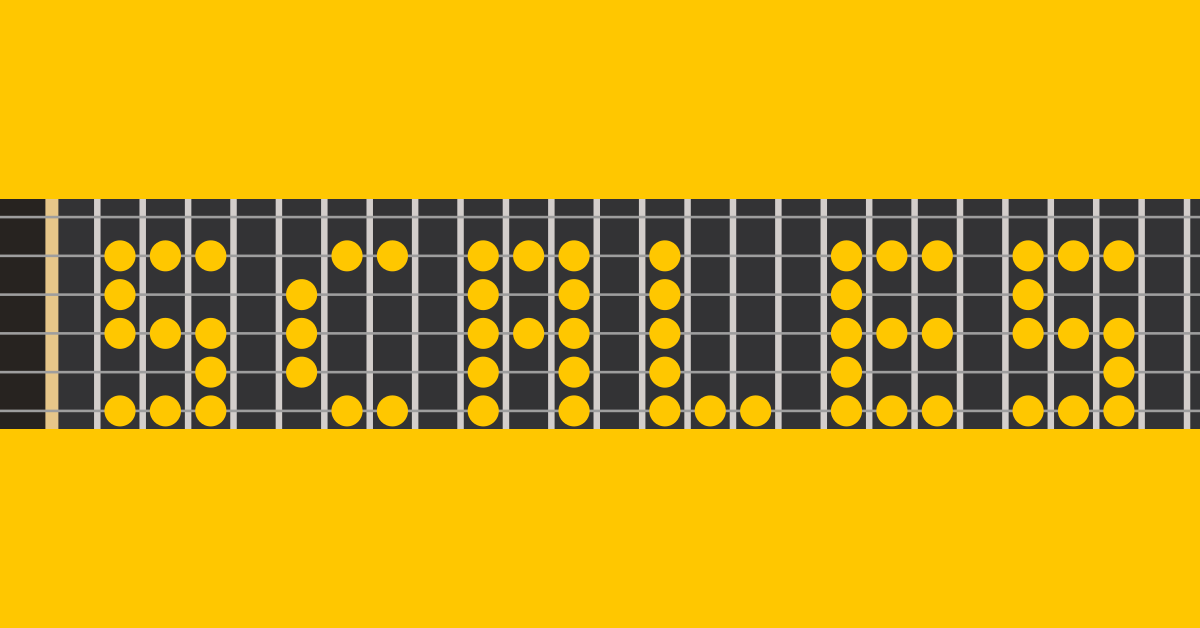
If you’ve ever stumbled across the word “modes” in a guitar forum and immediately felt your eyes glaze over – you’re not alone. Modes have a reputation for being one of the most confusing topics in music theory. But here’s the truth: once you understand what they actually are and, more importantly, how they sound, they’ll completely change the way you think about the fretboard. Let’s break it all down, mode by mode.
What Are Modes, Anyway?
Before diving in, let’s get the concept straight. The 7 modes all come from the same source: the major scale. Take the C major scale: C – D – E – F – G – A – B. Now, instead of always starting on C, imagine starting on each of the other notes in turn. Each starting point gives you a different pattern of whole steps and half steps – and that pattern has its own name, its own character, and its own emotional color.
Think of it like this: same set of notes, seven different entry doors. Each door leads to a completely different room.
The 7 Modes at a Glance
Here they are in order, using the C major scale as the parent:
| # | Mode | Starting Note (in C) | Vibe |
|---|---|---|---|
| 1 | Ionian | C | Bright, happy |
| 2 | Dorian | D | Cool, bluesy minor |
| 3 | Phrygian | E | Dark, exotic, Spanish |
| 4 | Lydian | F | Dreamy, floating |
| 5 | Mixolydian | G | Bluesy, dominant, rock |
| 6 | Aeolian | A | Sad, natural minor |
| 7 | Locrian | B | Unstable, tense, dissonant |
1. Ionian – The Major Scale You Already Know
Formula: W – W – H – W – W – W – H
Ionian is just the plain major scale. If you can play a major scale, you already know Ionian. It sounds bright, resolved, and happy – the sonic equivalent of a sunny day. It’s the bedrock of countless pop songs, country tunes, and classic rock anthems.
Here’s the C Ionian scale ascending and descending – the familiar major scale that’s likely already under your fingers.
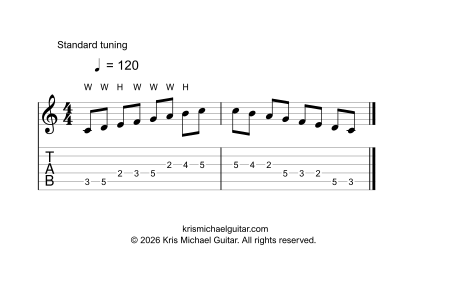
Listen to how bright and resolved Ionian sounds – that sense of “home” is what every other mode is measured against.
The fretboard diagram below shows the full Ionian pattern. Notice how naturally it sits under the hand.
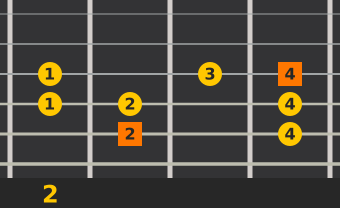
On the guitar: Play your standard major scale pattern starting from the root. That’s it. You’re already doing it.
2. Dorian – Minor With a Major Sixth
Formula: W – H – W – W – W – H – W
Dorian is a minor mode, but it has a raised 6th compared to the natural minor scale, which gives it a unique, slightly brighter quality than pure minor. It’s funky, bluesy, and sophisticated – minor enough to feel dark, but with enough light to groove.
The tab below walks you through D Dorian ascending and descending. Pay attention to that raised 6th as you climb the scale.
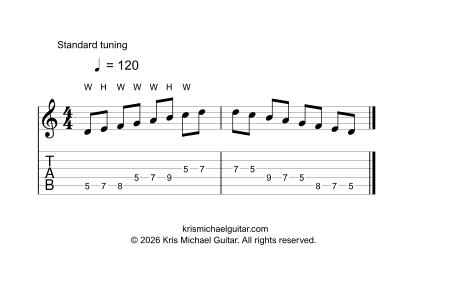
Hear how Dorian sits right between major brightness and minor darkness – that subtle lift in the middle of the scale is its defining character.
The fretboard diagram below highlights the raised 6th so you can see exactly where Dorian diverges from the natural minor.
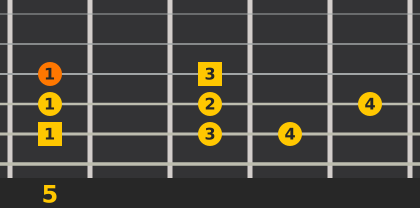
On the guitar: Play the natural minor scale (Aeolian), but raise the 6th by one fret. That one note change transforms the whole feeling.
3. Phrygian – The Dark and Exotic One
Formula: H – W – W – W – H – W – W
Phrygian is one of the most distinctive-sounding modes. That flattened 2nd degree – the half step right at the start – gives it an unmistakably dark, almost middle eastern or flamenco flavor. It’s tense, brooding, and intense.
This is E Phrygian ascending and descending – that very first step is a half step, and you’ll feel it immediately.
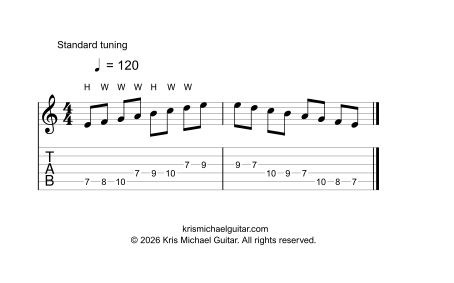
The moment you hear Phrygian, it’s unmistakable – that flat 2nd at the start gives it an instantly dark, Spanish tension.
The fretboard diagram below makes the half-step opening interval easy to spot – it’s the move that defines everything about this mode’s personality.
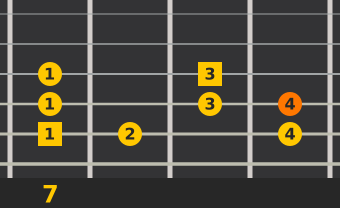
On the guitar: Same shape as the natural minor scale, but that first interval is a half step. Feel how immediately it sounds different from Dorian or Aeolian – more menacing, more dramatic.
4. Lydian – The Dreamiest Mode
Formula: W – W – W – H – W – W – H
Lydian has a raised 4th degree, which is what gives it that floaty, otherworldly, almost suspended quality. It’s major-sounding, but there’s something slightly unresolved about it that feels like you’re hovering just above the ground.
Here’s F Lydian ascending and descending – keep your ear on the raised 4th as the scale climbs.
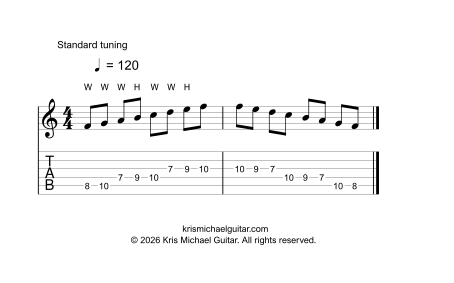
The example below lets Lydian speak for itself – close your eyes and notice how that one raised note makes the whole scale feel like it’s suspended in mid-air.
The fretboard diagram below highlights the raised 4th – one fret higher than you’d expect in a standard major scale.
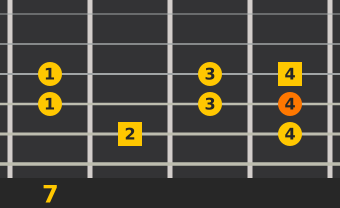
On the guitar: Play the major scale, but raise the 4th by one fret (one extra half step). Notice how that single change makes the whole scale feel like it’s lifting off.
5. Mixolydian – The Rock and Blues Workhorse
Formula: W – W – H – W – W – H – W
Mixolydian is a major scale with a flattened 7th. That one note makes all the difference – it creates a slightly unresolved, bluesy tension that sits perfectly over dominant 7th chords. If Ionian is polished and bright, Mixolydian is its cooler, slightly rough-around-the-edges cousin.
Below is G Mixolydian ascending and descending – it looks just like the major scale until that last whole step at the top.
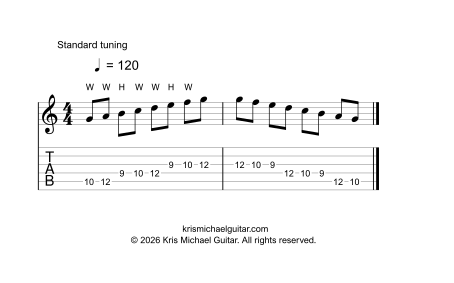
That slight bluesy edge you hear compared to the major scale? That’s the flattened 7th doing its work – rock and blues guitarists live right there.
The fretboard diagram below shows how close Mixolydian is to the major scale pattern, with just one note shifted down a fret.
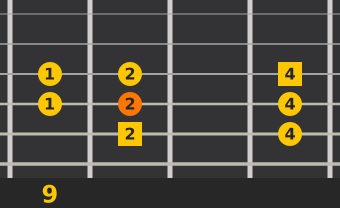
On the guitar: Major scale, flatten the 7th by one half step. This is arguably the most practical mode to learn after Ionian and Aeolian, especially if you play rock or blues.
6. Aeolian – The Natural Minor Scale
Formula: W – H – W – W – H – W – W
Aeolian is simply the natural minor scale – the one most guitarists learn early on. It sounds melancholic, emotional, and serious. It’s the go-to for rock ballads, metal riffs, and sad songs of every genre.
Here’s A Aeolian ascending and descending – if you’ve spent any time with the minor pentatonic, this scale will feel like familiar territory with two notes added.
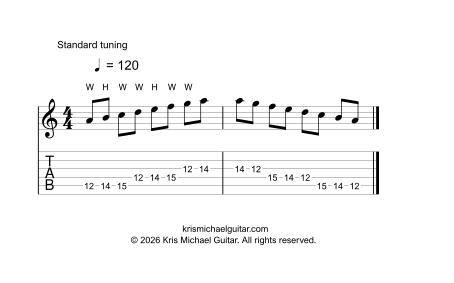
That melancholic, emotional weight is the natural minor sound most guitarists instinctively reach for when they want to express something serious or heavy.
The fretboard diagram shows the full Aeolian pattern – compare it to your minor pentatonic box and you’ll immediately see where the two extra notes slot in.
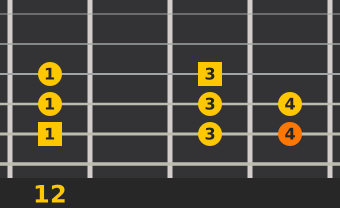
On the guitar: This is your minor pentatonic scale’s bigger brother — same emotional territory, just with two extra notes filling in the gaps. Most guitarists already know this shape; they just didn’t know it had a fancy name.
7. Locrian – The Unstable Outsider
Formula: H – W – W – H – W – W – W
Locrian is the odd one out. It has both a flattened 2nd and a flattened 5th (tritone), which means it has no stable, consonant home chord. It sounds tense, dissonant, and deeply unsettled – almost like the music refuses to resolve.
The tab below shows B Locrian ascending and descending – notice how unsettled it feels even just running up the scale.
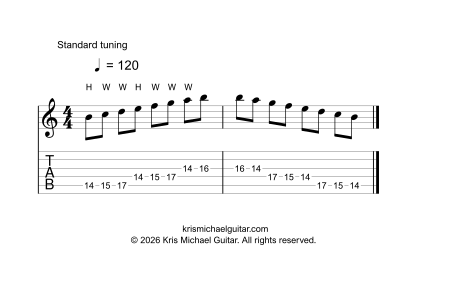
Locrian is the only mode that never quite feels like it resolves – that restless, tense quality comes from the flattened 2nd and flattened 5th working together.
The fretboard diagram below maps out Locrian’s unusual interval structure – it’s a pattern worth knowing even if you only visit it occasionally for moments of extreme tension.
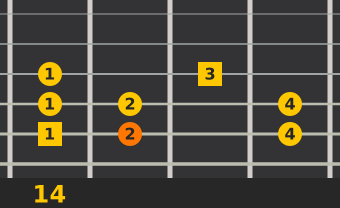
On the guitar: The hardest mode to make “work” musically. Most players use it in passing – for brief moments of extreme tension before resolving elsewhere. Treat it as a color to visit, not a home to stay.
How to Actually Use Modes (The Practical Bit)
Learning scales is one thing. Using them in real music is another. Here are a few practical ways to start incorporating modes:
1. Learn the chord-mode relationship. Each mode pairs naturally with a chord type. Dorian over minor chords, Mixolydian over dominant 7ths, Lydian over major 7ths. Start there.
2. Drone it. Play a single note (the root of the mode) on a loop, then improvise over it using the mode. Your ear will learn to hear the character of each mode far faster than theory ever will.
3. Learn songs, not just scales. The best way to internalize Mixolydian is to learn a Mixolydian riff you love and play it until it lives in your fingers.
4. Don’t treat them as separate scales. The beauty of modes is that they’re all connected. Once you know the major scale across the whole neck, you essentially know all 7 modes — just from different starting points.
Final Thoughts
The 7 modes are less about memorizing formulas and more about expanding your palette. Want something dreamy? Reach for Lydian. Need a dark, Spanish edge? Phrygian’s got you. Chasing that classic blues-rock feel? Mixolydian all day.
The fretboard is bigger than the minor pentatonic box. Modes are your invitation to explore the rest of it.
Start with one mode this week. Really listen to it. Play it slow, find songs that use it, and let your ear get familiar with its personality. That’s the whole secret – it’s about sound, not theory.