
Few guitar techniques are as instantly recognizable – or as powerful – as the power chord. From classic rock and punk to metal and modern alternative music, power chords form the backbone of countless iconic riffs. Despite their simplicity, they are one of the most important tools every guitarist should master.
In this article, we’ll explore what power chords are, why they sound so strong, how to play them, and how to use them creatively in real music.
What Is a Power Chord?
A power chord is a simplified chord consisting of only two different notes:
- the root
- the perfect fifth
The following diagrams show the A power chord as an example.
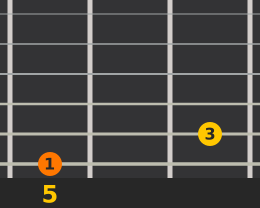
Here is a basic pattern based on the A5 power chord.
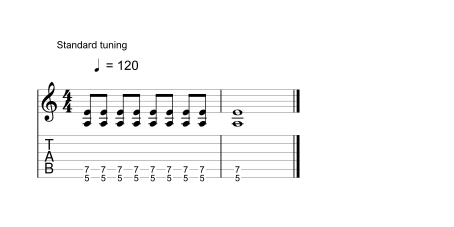
Let’s hear how this sounds.
Often, the root note is doubled an octave higher, resulting in a three-note shape on the guitar.
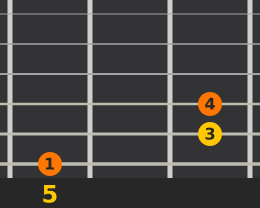
Here is the basic pattern based on the A5 power chord with the doubled octave.
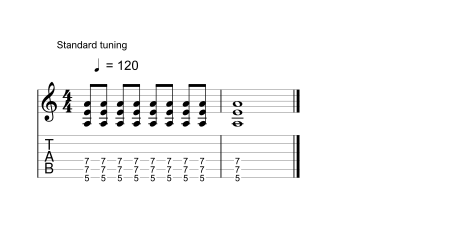
Let’s hear how this sounds.
Unlike major or minor chords, power chords do not include a third, which means they are neither major nor minor. This neutrality gives them a tight, focused sound that works well with distortion and high gain.
Power chords are commonly written as:
- E5
- A5
- G5
The “5” indicates the interval of a fifth rather than a full chord quality.
Why Power Chords Sound So Powerful
Power chords became dominant in rock music for several reasons.
Clarity with Distortion
When distortion is applied, additional overtones are generated, which can cause complex chords to lose definition. Power chords avoid this problem by using only a few carefully chosen notes, keeping the sound tight and focused. This is why they cut through a mix so effectively, even at high gain levels.
Strong Harmonic Relationship
The root and perfect fifth create a highly stable and consonant interval, which is why power chords sound so strong and direct. Because there is no third, the chord avoids any major or minor coloration, resulting in a more neutral but powerful tone. This simplicity is what gives power chords their tight, focused character, especially when played with distortion.
Easy Transposition
Power chord shapes are fully movable across the fretboard, making them incredibly versatile. Once you learn a shape, you can shift it up or down the neck to play different chords by simply changing the root note. This allows you to quickly adapt progressions to any key without learning new fingerings.
Proper Technique Tips
Use Muting
Muting unwanted strings is essential for achieving a clean and professional sound, especially when using distortion. Both your fretting and picking hand work together to prevent noise and accidental ringing. Developing this control will make your playing sound tighter, more precise, and more confident.
Apply Even Pressure
Applying too much pressure can actually make playing more difficult and lead to unnecessary tension in your hand. Instead, focus on using just enough force to produce a clean, buzz-free note. This improves control, reduces fatigue, and helps you play more efficiently over longer periods.
Practice Palm Muting
Palm-muted power chords produce a tight, percussive sound that adds rhythmic drive and intensity to your playing. By lightly resting your picking hand on the strings near the bridge, the notes become shorter and more controlled. This technique is widely used to create contrast between heavy, chugging sections and more open, ringing chords.
Common Power Chord Progressions
Basic Progression
This example shows a simple and essential power chord progression using A5, D5, and E5. It focuses on clean transitions and steady rhythm, making it ideal for beginners. Take your time to ensure each chord rings clearly before increasing speed.
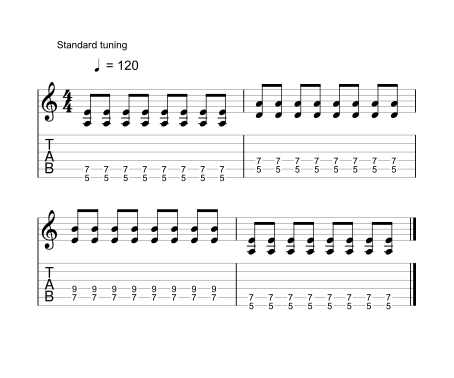
Let’s hear how this sounds.
Adding Rhythmic Breaks
Power chords don’t have to be played continuously – adding short breaks can make a progression feel more dynamic and expressive. In this example, pauses between chords create a stronger sense of groove and timing. Focus on keeping your rhythm tight, especially during the silent moments.
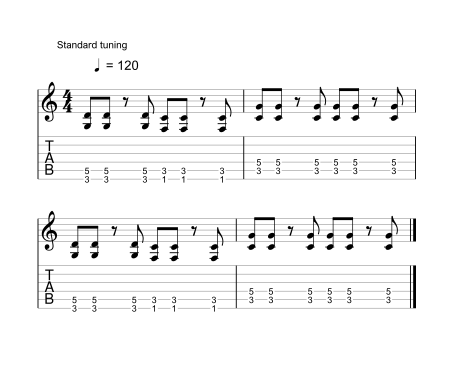
Let’s hear how this sounds.
Using Palm Muting
Palm muting adds a percussive, controlled character to power chords and is widely used in rock and metal. This example demonstrates how muting certain strums can create contrast and drive within a progression. Pay attention to the balance between muted and open chords to keep the sound clear and punchy.
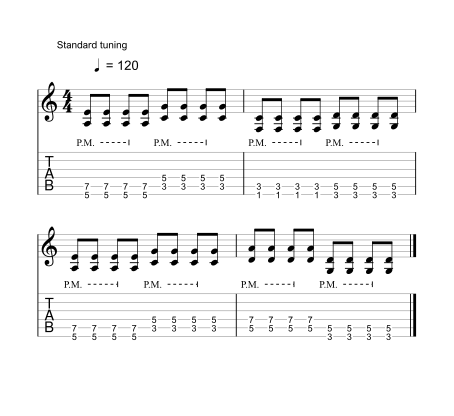
Let’s hear how this sounds.
Final Thoughts
Power chords prove that simplicity can be incredibly effective. With just two notes, you can create massive riffs, driving rhythms, and unforgettable songs. Whether you’re a beginner learning your first rock song or an experienced guitarist refining your rhythm playing, mastering power chords is essential.
Plug in, add some gain, and start moving those shapes around the neck – that’s where rock guitar truly begins.