
Whether you’re just picking up the guitar for the first time or brushing up on your fundamentals, mastering a core set of chords is the key to unlocking hundreds of songs. These essential chords form the foundation of countless rock, pop, blues, and folk tunes. Today, we’ll walk through 9 of the most important guitar chords that every guitarist should have in their toolbox.
Chords
These chords are:
C Major, F Major, G Major, A Major, D Major, E Major, A Minor, E Minor, and D Minor.
Let’s dive in.
1. C Major
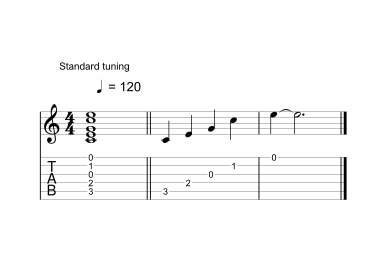
The C Major chord is one of the first chords many guitarists learn. It has a bright, full sound and appears in endless songs across genres.
Chord Shape:
- Place your ring finger on the 3rd fret of the A string (5th string)
- Middle finger on the 2nd fret of the D string (4th string)
- Index finger on the 1st fret of the B string (2nd string)
- Strum from the A string down
2. F Major
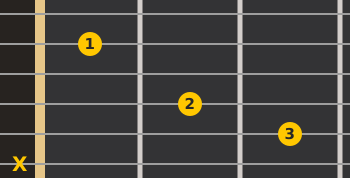
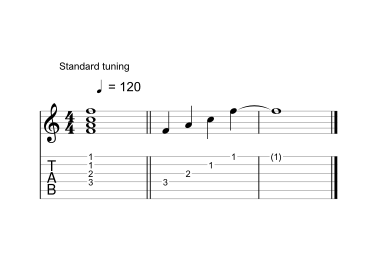
The F Major chord can be tough for beginners because it’s often taught as a barre chord. But here we start with a simple version using just the top 4 strings.
Chord Shape:
- Index finger on the 1st fret of the high E string and H string (mini barre)
- Middle finger on the 2nd fret of the G string (3rd string)
- Ring finger on the 3rd fret of the D string (4th string)
- Strum from the D string down
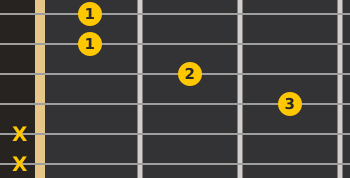
3. G Major
G Major is powerful and full-bodied. It’s used frequently in folk, rock, and pop music.
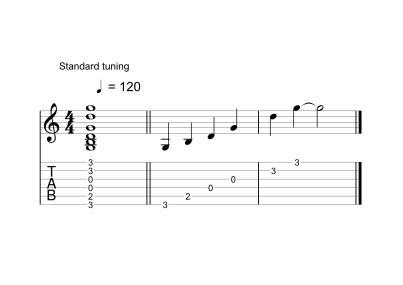
Chord Shape:
- Middle finger on the 3rd fret of the low E string (6th string)
- Index finger on the 2nd fret of the A string (5th string)
- Ring finger on the 3rd fret of the H string (2nd string)
- Little finger on the 3rd fret of the high E string (1st string)
- Strum all six strings
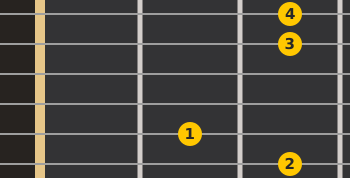
4. A Major
This is a compact chord that sounds warm and clean.
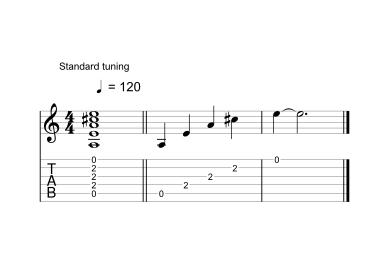
Chord Shape:
- Index, middle, and ring fingers on the 2nd frets of the D, G, and B strings (4th, 3rd, and 2nd)
- Strum from the A string down
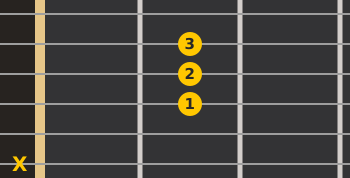
5. D Major
The D Major chord has a sweet, ringing tone and is a go-to chord in many acoustic ballads.
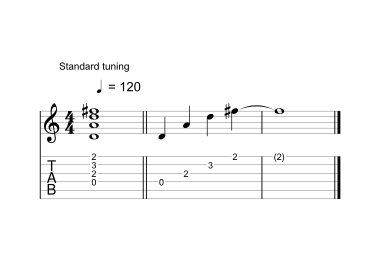
Chord Shape:
- Index finger on the 2nd fret of the G string (3rd string)
- Middle finger on the 2nd fret of the high E string (1st string)
- Ring finger on the 3rd fret of the B string (2nd string)
- Strum from the D string down
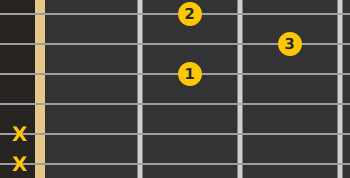
6. E Major
E Major is punchy and resonant. It’s also the base for many barre chord shapes up the neck.
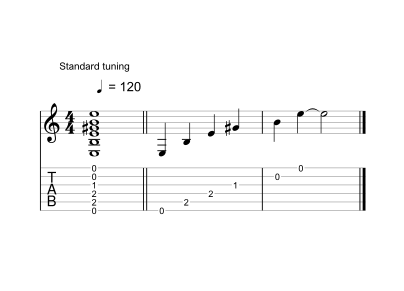
Chord Shape:
- Middle finger on the 2nd fret of the A string (5th string)
- Ring finger on the 2nd fret of the D string (4th string)
- Index finger on the 1st fret of the G string (3rd string)
- Strum all six strings

7. A Minor
A Minor is often the first minor chord players learn. It’s emotional and moody, perfect for ballads and introspective songs.
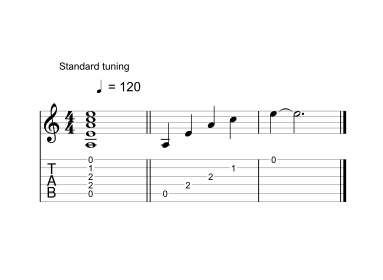
Chord Shape:
- Index finger on the 1st fret of the B string (2nd string)
- Middle finger on the 2nd fret of the D string (4th string)
- Ring finger on the 2nd fret of the G string (3rd string)
- Strum from the A string down
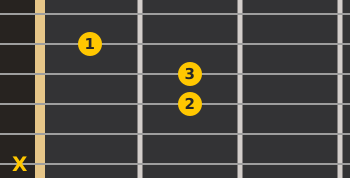
8. E Minor
Possibly the easiest chord to play, E Minor has a dark, full sound and is used across all genres.
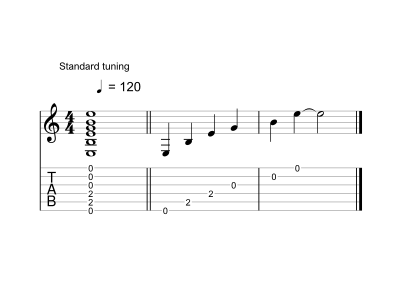
Chord Shape:
- Middle finger on the 2nd fret of the A string (5th string)
- Ring finger on the 2nd fret of the D string (4th string)
- Strum all six strings

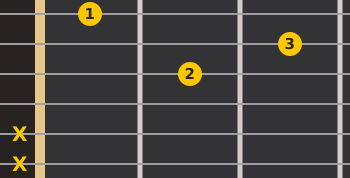
9. D Minor
A haunting and beautiful chord, D Minor adds emotional depth to any progression.
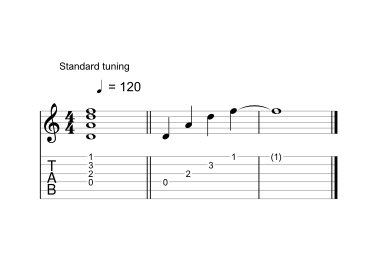
Chord Shape:
- Index finger on the 1st fret of the high E string (1st string)
- Middle finger on the 2nd fret of the G string (3rd string)
- Ring finger on the 3rd fret of the B string (2nd string)
- Strum from the D string down
Final Thoughts
These 9 chords are the bedrock of popular music. With them, you can play hundreds of classic songs, write your own progressions, and build toward more complex chord shapes. If you’re a beginner, practice transitioning smoothly between these chords. If you’re more advanced, try exploring how these shapes fit into barre chords, scales, and alternate tunings.
Happy playing! 🎶